

How Can Wealth Management Help Me Achieve My Long-Term Financial Goals?
Wealth management helps you achieve long-term financial goals by connecting investment strategy, retirement and estate planning, and risk management into one coordinated plan – rather than treating each piece separately. The goals themselves might be years or decades away, but the planning that gets you there starts now. Here’s how the pieces fit together.
Key Takeaways
- Long-term financial goals need clear definition before a strategy can be built around them.
- Comprehensive financial planning integrates investments, taxes, retirement, and estate considerations rather than treating them in isolation.
- Asset allocation and diversification are central to sustainable long-term growth.
- Retirement and estate planning work together, not as separate, disconnected tasks.
- Risk management and insurance protect the plan itself from being derailed by the unexpected.
- A financial advisor’s role is to coordinate all of this – not just manage investments.
What Are Long-Term Financial Goals and Why Are They Important?
Long-term financial goals give a plan direction. Without them, investment decisions tend to become reactive – chasing performance or reacting to headlines – rather than working toward something specific.
Which Types of Financial Goals Can Wealth Management Address?
Wealth management typically supports goals like a secure retirement, funding a child’s education, transitioning out of a business, building a legacy for future generations, or simply maintaining a certain lifestyle without depleting savings too quickly. These goals often overlap and compete for the same resources, which is exactly why they benefit from being planned together rather than separately.
How Does Defining Clear Goals Impact Your Financial Success?
A vague goal like “retire comfortably” is difficult to plan around, while a clearer goal – a target retirement age, an estimated income need, a specific legacy amount – provides a concrete target for planning. Clarity doesn’t mean rigidity; goals can and should evolve, but they need to be specific enough to actually guide decisions.
How Does Strategic Financial Planning Support Achieving Long-Term Goals?
A financial plan is the structure that connects today’s decisions to tomorrow’s goals – without it, even good individual choices can work against each other.
What Components Make Up a Comprehensive Financial Plan?

A comprehensive plan typically integrates investment strategy, tax planning, retirement income projections, estate considerations, and risk management into a single, coordinated framework. Creative Capital Wealth Management Group builds this kind of integrated approach through its Milestone Clarification Process™ (MCP™), which starts with a full picture of a client’s goals before recommending any specific strategy.
How Does Financial Planning Adapt to Changing Life Events?
A financial plan isn’t a document you write once and file away – life events such as marriage, the sale of a business, an inheritance, or a change in health can each shift your priorities and require real adjustments to the plan itself. Plans built with enough flexibility to adapt tend to hold up better over decades than plans designed around a single, fixed set of assumptions.
What Investment Strategies Drive Sustainable Long-Term Wealth Growth?
Once goals and a plan are in place, investment strategy becomes the engine that helps turn today’s savings into tomorrow’s outcomes.
How Does Asset Allocation Influence Portfolio Growth and Risk?
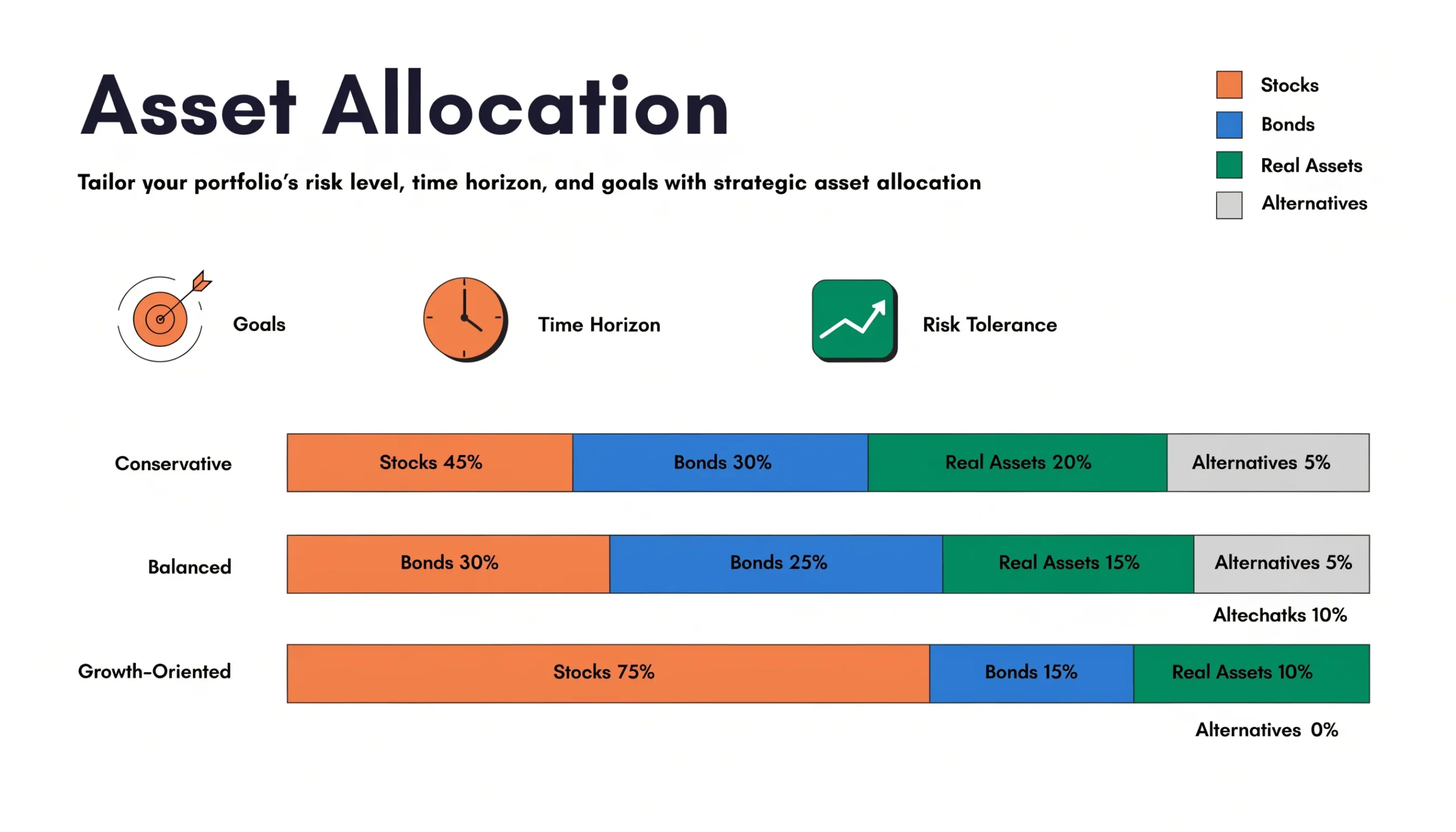
Asset allocation – how a portfolio is divided among stocks, bonds, real assets, and alternatives – is widely considered a bigger driver of long-term outcomes than picking individual investments. The right allocation depends on goals, time horizon, and how much volatility someone can tolerate without abandoning the plan.
Why Is Diversification Critical for Protecting Your Investments?
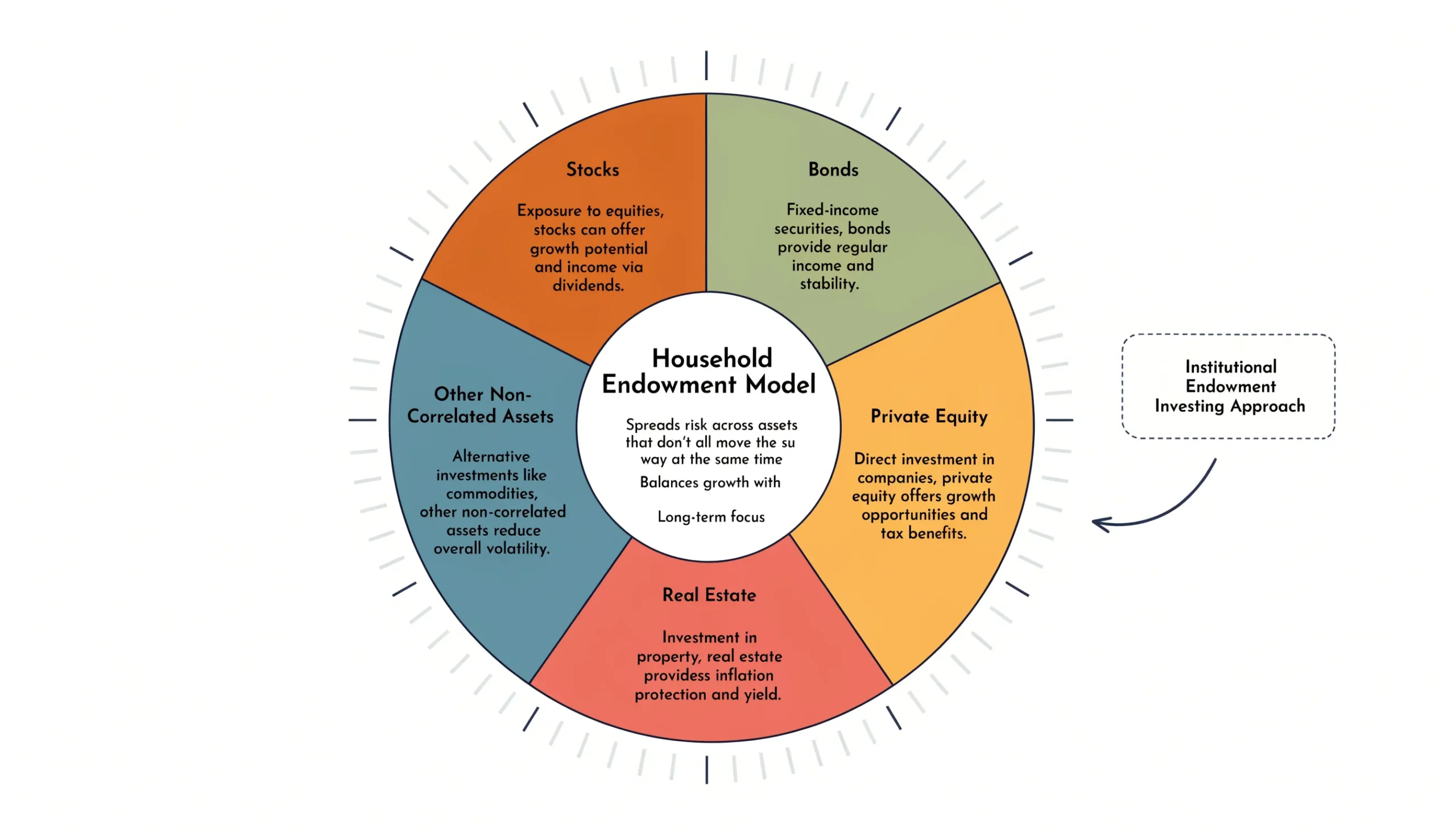
Diversification spreads risk across assets that don’t all move the same way at the same time, so a downturn in one area doesn’t derail the entire plan. CCWMG’s Household Endowment Model (CCHEM) applies this thinking beyond traditional stocks and bonds, incorporating private equity, real estate, and other non-correlated assets in a framework inspired by institutional endowment investing.
How Can Retirement and Estate Planning Secure Your Financial Future?
Retirement and estate planning are often treated as separate tasks, but they’re deeply connected – decisions made in one almost always affect the other.
What Retirement Planning Tools Does Wealth Management Offer?
Retirement planning typically draws on a combination of tax-advantaged accounts like 401(k)s and IRAs, a withdrawal strategy that sequences income efficiently, and coordination with Social Security timing to maximize lifetime benefits. Each piece affects the others – an early Social Security claim, for example, can change how much a portfolio needs to cover on its own.
How Does Estate Planning Protect Your Legacy and Family?
Estate planning ensures assets transfer according to your actual wishes, ideally with less delay, cost, and tax exposure than they would otherwise face. It’s not only for the ultra-wealthy – even a straightforward estate benefits from updated beneficiary designations, a current will, and coordination between the plan and the people who will eventually carry it out.
How Does Risk Management Safeguard Your Wealth Against Uncertainty?

No plan is complete without accounting for the things that could disrupt it – risk management is what keeps a long-term goal from being derailed by a short-term event.
What Insurance Strategies Help Mitigate Financial Risks?
Life insurance, disability insurance, and liability coverage each protect a different vulnerability – the loss of income, the loss of a provider, or exposure to a lawsuit that could otherwise unravel years of planning. Which coverage matters most depends heavily on life stage, dependents, and how exposed someone’s assets are in the first place.
How Does Wealth Management Address Market and Economic Volatility?
Markets move in cycles, and a plan built around a single favorable environment tends to struggle when conditions change. Structured wealth management addresses this less by trying to predict the next downturn and more by building a portfolio and a behavioral framework designed to hold up across different market conditions.
Why Is Partnering With a Financial Advisor Essential for Goal Achievement?

A plan on paper is only as good as the discipline and coordination behind it – which is where an advisor’s role becomes less about picking investments and more about keeping the whole plan on track.
How Does a Financial Advisor Develop and Manage Your Wealth Plan?
A financial advisor typically starts by clarifying goals, then builds and adjusts a coordinated strategy across investments, taxes, retirement, and estate planning as circumstances change. CCWMG’s complimentary Second Opinion Service™ offers a low-pressure way to see how this kind of coordinated planning might apply to an existing portfolio, before committing to anything further.
What Credentials and Services Should You Expect From a Wealth Manager?
Look for a wealth manager who holds an independently administered professional credential, operates as a fiduciary, and is transparent about fees and services in writing. CCWMG operates as a fiduciary, and its founder, Frederick E. Hubler, Jr., holds an MBA and the CWS® designation – credentials worth confirming directly with any advisor you’re evaluating, not just taking at face value.
Frequently Asked Questions
Do I need significant wealth before wealth management makes sense? Not necessarily – the value of coordinated planning tends to grow with financial complexity, not just account size, so even moderate wealth with multiple goals or income sources can benefit from a structured approach.
How is wealth management different from just investing? Investing is one component of wealth management, not the whole of it – wealth management also coordinates tax strategy, retirement income, estate planning, and risk management around your specific goals.
How often should a long-term financial plan be reviewed? At least annually, and any time there’s a major life event – a plan built around one snapshot in time tends to drift out of alignment with reality faster than people expect.
Can long-term goals change once a plan is in place? Yes, and they often do – a well-built plan should be flexible enough to adjust as goals, income, and circumstances evolve over time.
Building Toward What Matters, One Coordinated Decision at a Time
Long-term goals aren’t reached through a single strategy – they’re built through years of coordinated, well-timed decisions. Creative Capital Wealth Management Group is here whenever you’re ready to make sure yours are working together.