

Longevity risk – the risk of outliving your savings – is easy to underestimate because average life expectancy figures understate how long many healthy retirees actually live. A 65-year-old in good health has a meaningfully real chance of living into their 90s, and for married couples, the odds that at least one spouse reaches that age are substantially higher than either person’s individual odds. That’s the core challenge of longevity risk retirement planning: here’s why planning to “average” often means planning for the wrong number entirely.
Key Takeaways
- Average life expectancy understates the real planning horizon – it includes everyone, including those who die young, which pulls the average down.
- A healthy 65-year-old has a genuinely meaningful chance of living past 90 – commonly cited in the range of roughly one in four to one in three, depending on health and source.
- For couples, the “at least one spouse” probability of reaching 90 is meaningfully higher than either individual’s own odds.
- Healthcare costs have historically risen faster than general inflation, compounding the financial pressure of a longer retirement.
- Free tools exist to estimate your own personalized survival probability, rather than relying on a single average number.
- Delaying Social Security and considering partial annuitization are two of the more direct ways to specifically address longevity risk.
What Is Longevity Risk, and Why Do Most Retirement Plans Underestimate It?
Understanding why this risk gets underestimated starts with understanding what “average life expectancy” actually measures.
Why Do Average Life Expectancy Figures Mislead Retirees?
Average life expectancy figures include everyone in the underlying population, including people who die relatively young, which pulls the average down and can make the number look lower than what a healthy retiree should actually plan around. For someone who has already reached 65 in reasonably good health, the realistic planning horizon tends to be well beyond the population-wide average, not the average itself.
What’s the Actual Probability of Living Past 90?
Based on Social Security Administration actuarial life tables – a core input for sound life expectancy retirement planning – a 65-year-old in reasonably good health is commonly cited as having roughly a one-in-four to one-in-three chance of living past 90 – specific figures vary by source, health status, and family longevity history, but the underlying message is consistent: this isn’t a rare tail outcome. CCWMG’s Milestone Clarification Process™ (MCP™) coordinates retirement income planning as part of a client’s full financial picture, which includes accounting for this kind of longer, less certain time horizon rather than assuming a fixed endpoint.
Why Does Longevity Risk Look Different for Couples Than Individuals?
For married couples specifically, the relevant question isn’t about either person’s odds alone.
What Does “Joint Life Expectancy” Actually Mean?
For a married couple, the meaningful question is the probability that at least one spouse lives to a given age – and because that’s a joint probability across two people, it’s consistently higher than either individual’s own odds of reaching that same age. This matters because a plan needs to support whichever spouse lives longest, not just an “average” outcome for the household.
Why Does This Change How Couples Should Plan Together?
Because the surviving spouse typically needs the plan to keep working for years after the first spouse passes, retirement income and Social Security claiming decisions are often made with this joint, longer horizon specifically in mind – not simply split down the middle based on each person’s individual life expectancy. This is part of why Social Security claiming strategy for couples is frequently built around the higher earner delaying benefits, since the surviving spouse generally inherits the larger of the two benefit amounts – a core piece of retirement income planning for couples that a single individual life expectancy figure simply doesn’t capture.
How Does Longevity Risk Interact With Healthcare and Long-Term Care Costs?
A longer retirement doesn’t just mean more years of ordinary expenses – it also means more years of exposure to costs that tend to rise faster than everything else.
Why Do Healthcare Costs Rise Faster Than General Inflation?
Healthcare costs have historically risen at a meaningfully faster rate than general inflation, which means the purchasing power calculations that work for everyday expenses often understate what healthcare will actually cost decades into retirement. This compounding effect becomes more significant the longer a retirement actually lasts, which is exactly the scenario longevity risk describes.
What Role Does Long-Term Care Play in a 30-Year Retirement?

The longer a retirement extends, the more realistic the possibility of eventually needing some form of long-term care becomes, and these costs can be substantial enough to meaningfully affect an otherwise well-funded plan. This is why long-term care planning deserves its own line item – whether through insurance, dedicated savings, or another strategy – rather than assuming it won’t apply or hoping a general retirement fund will absorb it if it does.
What Tools Actually Exist to Estimate Your Own Longevity Risk?
Rather than relying on a single average figure, there are legitimate, free resources built specifically to show a fuller picture.
What Is the Actuaries Longevity Illustrator?
The Actuaries Longevity Illustrator, built jointly by the Society of Actuaries and the American Academy of Actuaries, is a free tool that converts a few basic inputs into a full survival probability curve – showing your estimated chances of living to specific ages like 80, 85, 90, and 95 – rather than reducing everything to a single life expectancy number. This kind of tool reflects how professional actuaries actually think about the problem: as a range of probabilities, not a fixed date.
How Should You Use a Survival Probability Curve, Not Just a Single Number?
A survival probability curve lets you see, for example, that if there’s a meaningful chance of living to 90 or beyond, a retirement plan built to last only 20 years can carry meaningful risk, depending on individual circumstances – the goal is matching your plan’s time horizon to your actual probability curve, not the average. A plan that fails is generally at its most painful when it fails late, when the surviving retiree is oldest and has the fewest options left to adjust.
What Strategies Actually Address Longevity Risk Directly?
Beyond simply saving more, a few specific strategies are built to address this particular risk.
How Does Delaying Social Security Function as Longevity Insurance?
Delaying Social Security past full retirement age increases your monthly benefit for as long as you live, which functions as a direct hedge against longevity risk – the longer you actually live, the more that decision to delay ends up paying off. This is one of the more commonly cited, straightforward strategies specifically aimed at addressing the risk of living longer than a plan initially assumed.
How Can Annuities Help Hedge This Specific Risk?
Annuities work by pooling longevity risk across a large population of purchasers, which allows an insurance company to efficiently guarantee income for as long as an individual lives – something an individual retiree generally can’t replicate on their own, since no one knows their own specific lifespan in advance. This doesn’t mean annuitizing an entire portfolio is the right move for everyone, but understanding annuities and longevity risk together – as a legitimate, purpose-built tool rather than a generic insurance product – is worth doing before ruling it out.
How Do You Actually Build a Plan Around a 25-to-35-Year Horizon?
Bringing all of this together means being honest about the actual planning target, not the comfortable one.
Why Is a 20-Year Plan Often the Wrong Target?
If a retiree has a meaningful chance of living past 90 – which for many healthy 65-year-olds is a real possibility, not an edge case – a retirement plan built around a 20-year horizon carries a real risk of running short during exactly the years when the retiree has the least ability to adjust. Planning around a 25-to-35-year horizon isn’t pessimistic; it’s simply planning for the range of outcomes that’s actually plausible.
How Does CCWMG Approach Planning for Uncertain Longevity?
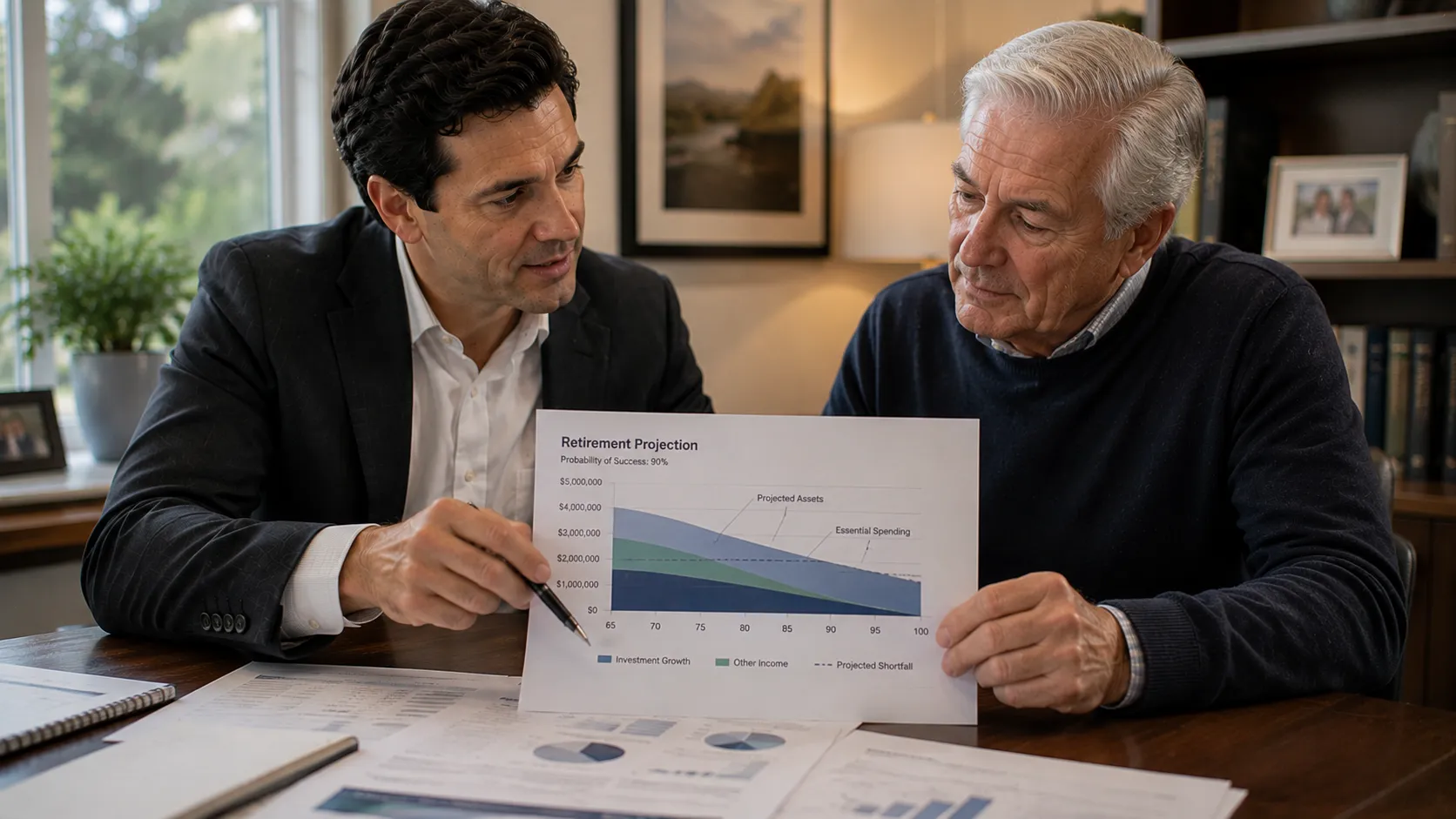
CCWMG’s fiduciary standard and coordinated Milestone Clarification Process™ are built around a client’s actual full financial picture, including realistic longevity assumptions rather than a single average figure that may understate how long the plan actually needs to last. CCWMG’s complimentary Second Opinion Service™ is a reasonable way to see whether your own current plan is genuinely built around the right time horizon.
Frequently Asked Questions
Does family history actually predict my own longevity? It’s a relevant factor to consider, though it’s not the only one – health status, lifestyle, and continued improvements in medical care over time all matter too, which is part of why tools using multiple inputs tend to give a more complete picture than family history alone.
Is it possible to plan for too long a retirement and oversave unnecessarily? It’s a real tradeoff worth discussing directly with a planner, since a plan built around an extremely conservative time horizon might mean spending less than necessary earlier in retirement – the goal is a realistic, well-reasoned horizon, not an arbitrarily long one.
Wondering If Your Own Plan Is Actually Built for How Long You Might Live?
Most retirement plans are built around an average that quietly leaves out many people who live well past it. Creative Capital Wealth Management Group can help you find out whether your own plan is built for the years you’re actually likely to need it.