

Fee-Only vs. Fee-Based vs. Commission: What Determines Whether You Can Trust a Wealth Manager’s Advice
How a wealth manager gets paid – fee-only, fee-based, or commission – shapes their incentives, and understanding the difference is one of the fastest ways to evaluate whether their advice is likely to be built around your interests or their compensation. None of the three models automatically makes an advisor untrustworthy, but each carries a different set of conflicts worth understanding before you commit to anything. Here’s how to tell them apart, and how to verify which one you’re actually working with.
Key Takeaways
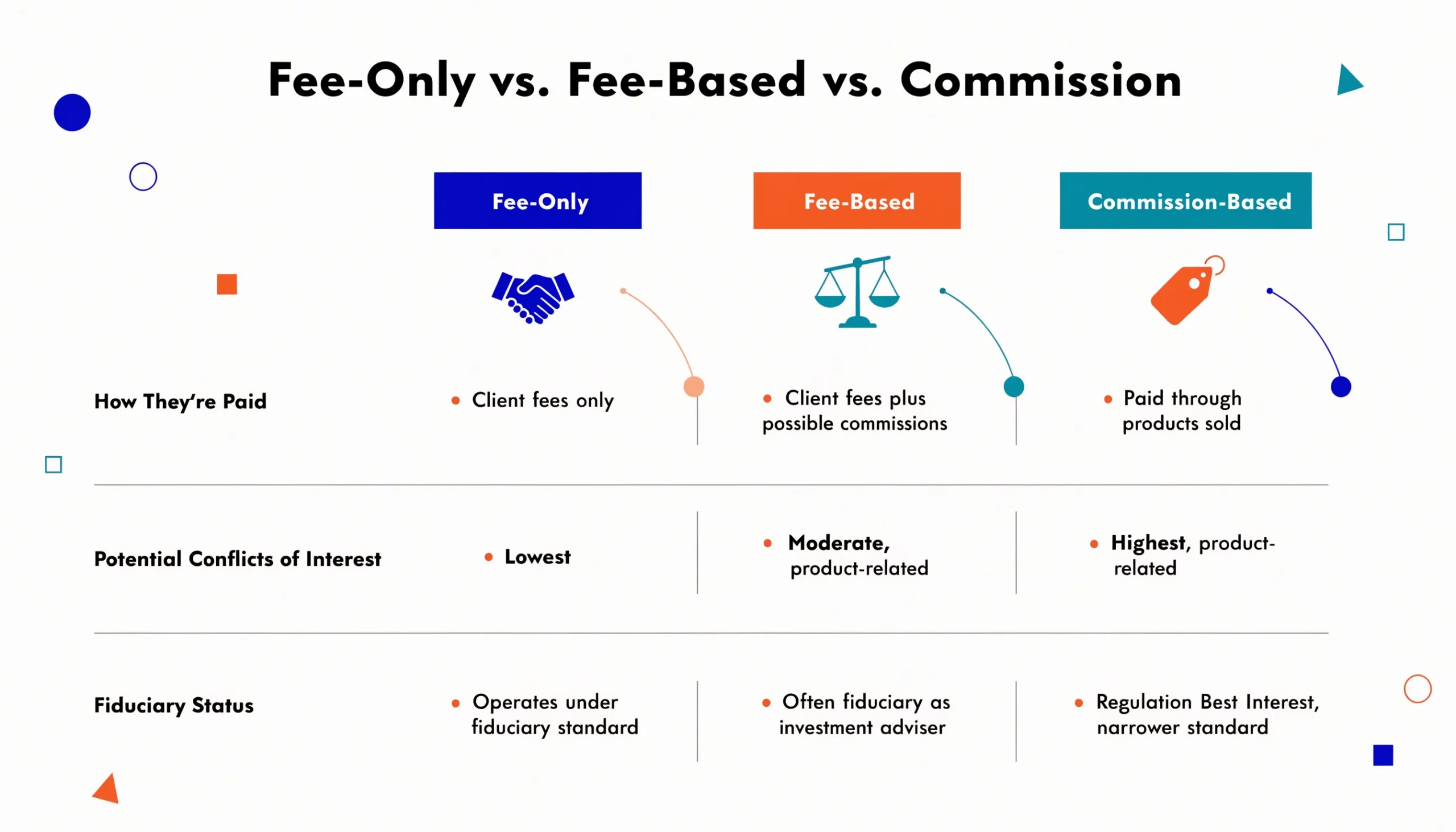
- Fee-only advisors are paid exclusively by clients – no commissions, no product-related compensation. This is a specific, regulated term under standards like the CFP Board’s Code of Ethics, so it’s worth confirming directly rather than taking the label at face value.
- Fee-based advisors charge client fees but may also receive commissions or other product-related compensation, creating a hybrid structure. Because the two terms sound so similar, it’s worth asking specifically whether any product-related compensation applies to your account.
- Commission-based advisors are paid primarily through the products they sell, which is worth understanding before assuming a recommendation is unbiased. Advice under this model can appear “free” since there’s often no separate bill, but the advisor is still being compensated indirectly through what’s sold.
- Fiduciary duty and compensation structure are related but not identical – it’s worth understanding both separately. Fee-only and many fee-based advisors registered as investment advisers are held to a fiduciary standard, while commission-based recommendations typically fall under the narrower Regulation Best Interest.
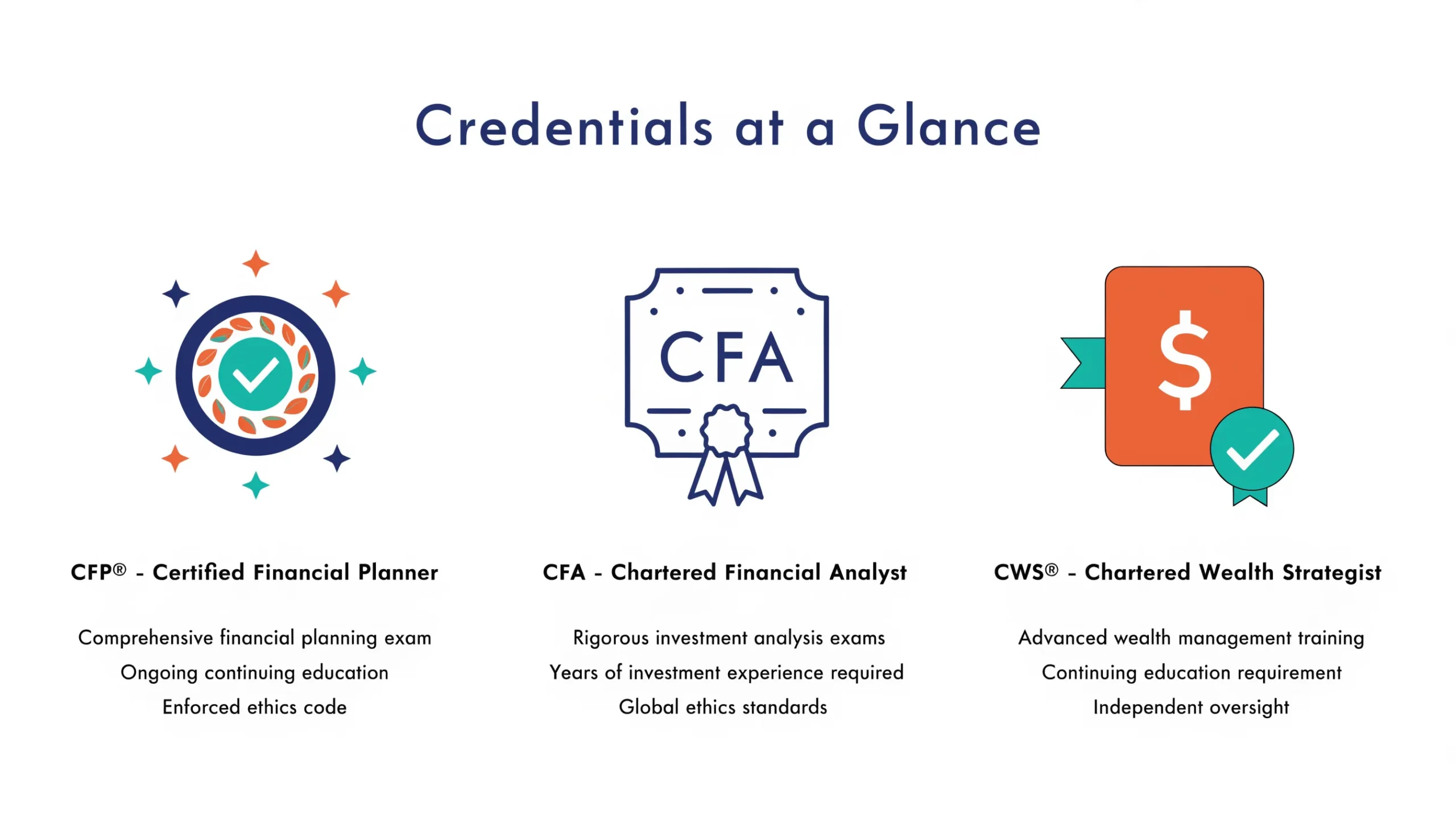
- Credentials and regulatory verification matter regardless of fee model – they’re a separate layer of due diligence. Look for credentials issued by independent outside organizations, such as CFP®, CFA, or CWS®, which require ongoing education and ethics standards.
- Free tools exist to check both compensation and regulatory history directly, rather than relying on what an advisor tells you. FINRA BrokerCheck and the SEC’s IAPD database are both free and pull directly from an advisor’s official regulatory filings.
What Do Fee-Only, Fee-Based, and Commission Actually Mean?
These three terms get used loosely in casual conversation, but they describe meaningfully different compensation structures – and the difference is worth understanding precisely, not just generally.
How Does a Fee-Only Model Work?
A fee-only advisor is compensated exclusively by their clients – through flat fees, hourly rates, or a percentage of assets under management – with no commissions or product-related compensation of any kind, including through related parties. In practice, that means no 12b-1 fees, no insurance commissions, and no referral payments changing hands behind the scenes – if an advisor earns anything from a product recommendation beyond the client’s own fee, the “fee-only” label doesn’t apply, regardless of how the firm markets itself.
How Does a Fee-Based (Hybrid) Model Differ?
A fee-based advisor charges clients directly for advice, similar to a fee-only advisor, but may also receive commissions or other compensation from financial products they recommend. This hybrid structure is often confused with “fee-only” because the terms sound similar, but the distinction matters – fee-based advisors have a potential product-related incentive that fee-only advisors don’t.
How Does a Commission-Based Model Work?
A commission-based advisor is paid primarily or entirely through the financial products a client purchases – such as mutual funds, insurance, or annuities – rather than through a direct fee. This model can make advice appear “free” since there’s often no separate bill, but the advisor is still being compensated, just indirectly through what’s sold.
Why Does Compensation Structure Affect Whether You Can Trust an Advisor’s Advice?
Compensation structure doesn’t determine trustworthiness on its own, but it does shape the underlying incentives – which is exactly why it’s worth understanding before evaluating any specific recommendation.
What Is Fiduciary Duty and How Does It Connect to Compensation?
A fiduciary is legally required to act in the client’s best interest at all times, a standard most closely associated with fee-only and many fee-based advisors registered as investment advisers. CCWMG operates as a fiduciary, prioritizing planning ahead of product recommendations – a standard that’s separate from, though often related to, how compensation is structured. Commission-based recommendations from broker-dealers are generally held to Regulation Best Interest, which requires recommendations to be in the client’s best interest at the time they’re made, though this is a different (and narrower) standard than an ongoing fiduciary duty.
How Do Hidden Fees or Commissions Affect Trustworthiness?
The concern with commission or fee-based compensation isn’t that it’s inherently dishonest – it’s that conflicts can go unnoticed if they’re not clearly disclosed and asked about directly. A trustworthy advisor, regardless of compensation model, should be willing to explain exactly how they’re paid and disclose any product-related compensation without being pushed to do so.
How Can I Verify Which Compensation Model a Wealth Manager Actually Uses?

Rather than relying on a label like “fee-based” alone, it’s worth confirming the specifics directly – both by asking and by checking official disclosures.
What Should I Ask About Fees, Commissions, and Conflicts of Interest?
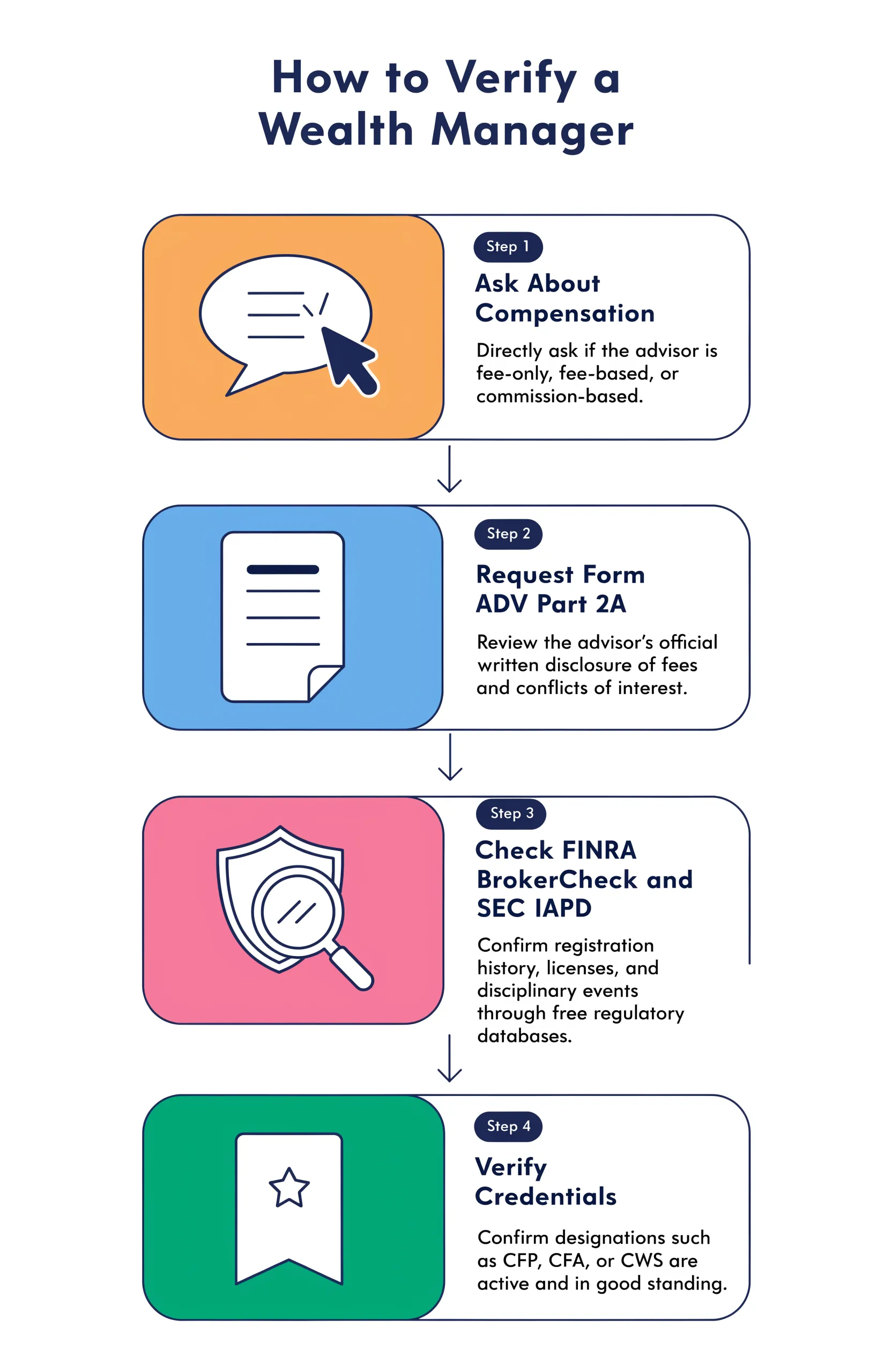
Ask directly: Are you fee-only, fee-based, or commission-based? Do you or your firm ever receive commissions, trails, or revenue-sharing from products you recommend? Can I see your Form ADV? Specific, direct answers are a good sign; a vague “we’re transparent about fees” without naming the actual model is worth following up on. CCWMG’s compensation structure depends on which of its two engagement paths a client chooses – a flat quarterly retainer through its Milestone Clarification Process™, or an asset management path where compensation is disclosed to the client before any investment is made – and asking for specifics on either path in writing is a reasonable starting point.
How Can I Check This Through Regulatory Disclosures?
SEC- and state-registered investment advisers must disclose their compensation structure and any conflicts of interest in their Form ADV Part 2A, a plain-language document available through the SEC’s Investment Adviser Public Disclosure (IAPD) database. Cross-checking what an advisor tells you against their own written disclosure is one of the most reliable ways to confirm the details.
What Credentials and Regulatory Oversight Support Trust, Regardless of Fee Model?
Compensation structure is one piece of the trust picture – credentials and regulatory standing are a separate, equally important layer.
What Are the Most Important Financial Advisor Certifications to Verify?
Look for credentials administered by independent, outside organizations – such as Certified Financial Planner (CFP®), Chartered Financial Analyst (CFA), or Chartered Wealth Strategist (CWS®) – which require education, testing, and ethics standards beyond a firm’s internal training. CCWMG’s team includes certified wealth strategists and certified financial planners, and founder Frederick E. Hubler, Jr. holds an MBA and the CWS® designation.
How Can I Check a Wealth Manager’s Regulatory Status and Disciplinary History?
FINRA’s BrokerCheck (brokercheck.finra.org) and the SEC’s Investment Adviser Public Disclosure database (adviserinfo.sec.gov) are both free, public tools for confirming registration history, licenses, and any disclosure events. This check applies regardless of which compensation model an advisor uses.
How Can I Use Tools and Resources to Vet a Wealth Manager Efficiently?

A handful of free, official resources can cover most of this verification process in a single sitting.
Which Online Platforms Help Verify Financial Advisor Backgrounds?
Beyond the registration and disciplinary checks covered above, it’s worth rounding out the picture with credential-specific lookups: the CFP Board’s verification tool and the CFA Institute’s member directory let you confirm a specific designation is active, in good standing, and hasn’t lapsed or been revoked. Running an advisor’s name through all of these – regulatory and credential-specific – in one sitting is usually enough to cover most of what matters before a first conversation.
Can AI Tools Help, and What Are Their Limits?
AI tools can be useful for quickly summarizing publicly available information or helping organize the questions you plan to ask, but they aren’t a substitute for checking official regulatory sources directly, since AI-generated summaries can be outdated or incomplete. Treat AI as a starting point for research, not a final answer on an advisor’s legitimacy.
Frequently Asked Questions
Is a fee-only advisor always better than a fee-based or commission-based one? Not automatically – fee-only removes one specific category of conflict, but credentials, experience, and fiduciary status all matter too. It’s one factor to weigh, not the only one.
Can an advisor be fee-based and still act as a fiduciary? Yes, in many cases – fiduciary status and compensation structure are related but separate questions, so it’s worth confirming both directly rather than assuming one implies the other.
Not Sure How Your Advisor Is Actually Paid? That’s Worth Finding Out
The clearest sign of a trustworthy advisor is often how easily they answer a direct question about compensation. If you’re not sure how your current advisor – or a prospective one – is actually paid, a conversation with Creative Capital Wealth Management Group is a good place to start asking the right questions.