

Behavioral finance research consistently shows that investors underperform the very funds they invest in – not because of bad fund selection, but because of predictable investment psychology patterns like loss aversion, overconfidence, and herding that lead to poorly timed decisions. These patterns are not indicators of limited intelligence; they are well-documented, universal tendencies that affect experienced and inexperienced investors alike. Here’s what the research actually shows, and what it means for your own portfolio.
Key Takeaways
- Investors have historically earned meaningfully less than the funds they’re invested in, largely due to poorly timed buying and selling, not poor fund choice.
- Loss aversion – feeling losses more intensely than equivalent gains – drives much of this mistimed behavior.
- The disposition effect leads investors to sell winners too early and hold losers too long, the opposite of a disciplined strategy.
- Overconfidence and confirmation bias reinforce each other, making investors more certain of decisions that aren’t actually well-supported.
- Herding and recency bias compound each other during both bubbles and crashes, often at exactly the wrong moment.
- Awareness of these biases alone usually isn’t enough – structure and outside perspective tend to matter more than willpower.
What Is Behavioral Finance, and Why Does It Matter to Your Returns?
Behavioral finance combines psychology and economics to explain why investors often act less rationally than traditional financial models assume – and the gap between theory and actual behavior has a real, measurable cost.
How Big Is the Actual Cost of These Behavioral Mistakes?
Research from DALBAR, a firm that has studied this gap annually since 1994, has consistently found that individual investors earn meaningfully lower returns than the funds they’re actually invested in, largely attributed to poorly timed buying and selling rather than poor fund selection. CCWMG’s stated investment philosophy acknowledges that while markets move in cycles, various factors influence outcomes, including investor behavior – a direct reflection of this same well-documented pattern.
Why Doesn’t Being Smart or Experienced Protect You From This?
These biases are consistently documented across large-scale studies of real brokerage accounts, and research specifically shows that investors who believe they’re less susceptible to bias often fall victim to it more frequently – overconfidence about avoiding bias is itself a form of bias. Professional fund managers aren’t immune either; a large share of actively managed funds underperform market benchmarks over long periods, often for related behavioral reasons.
What Is Loss Aversion, and How Does It Distort Decision-Making?
Loss aversion investing patterns are among the most extensively studied and influential biases in behavioral finance.
Why Do Losses Hurt More Than Equivalent Gains Feel Good?
Loss aversion, a core finding from Daniel Kahneman and Amos Tversky’s prospect theory, shows that losses are felt roughly twice as intensely as equivalent gains, which means investors often make decisions driven more by avoiding pain than by pursuing a proportional benefit. This is not a character flaw – it is a well-documented, near-universal pattern in how individuals process risk.
How Does This Show Up in Real Investment Decisions?
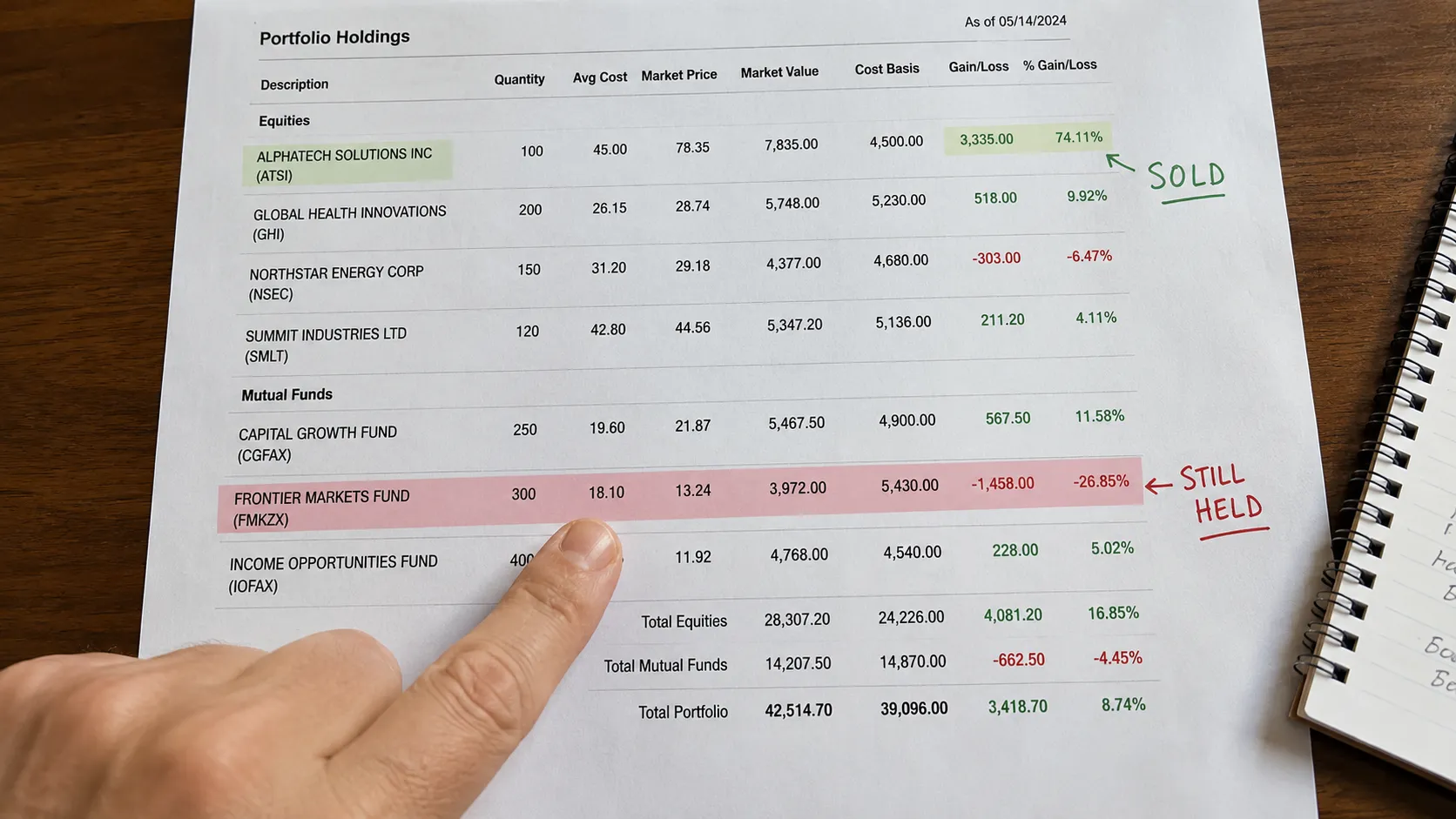
Loss aversion often leads investors to hold onto declining investments far longer than a rational assessment of the situation would suggest, essentially avoiding the discomfort of “locking in” a loss even when the underlying reasoning no longer supports holding the position. This single pattern is behind a meaningful share of the portfolio damage attributed to behavioral mistakes generally.
What Is the Disposition Effect?
This specific, well-documented pattern is almost the exact opposite of sound investment discipline.
Why Do Investors Sell Winners Too Early and Hold Losers Too Long?
The disposition effect describes the tendency to realize gains quickly – locking in the good feeling of a win – while holding onto losing positions in the hope they’ll recover, a pattern documented across large-scale studies of actual brokerage account behavior. This tends to leave portfolios overweighted in underperforming positions precisely because the winners get sold and the losers don’t.
How Does This Directly Connect to Loss Aversion?
The disposition effect is essentially loss aversion in action – selling a winner avoids the risk of the gain disappearing, while holding a loser avoids having to accept the loss as final, even though both instincts run counter to disciplined, unemotional portfolio management. Recognizing this connection is part of why addressing one bias often requires addressing the underlying emotional driver behind several others.
What Role Do Overconfidence and Confirmation Bias Play?
These two biases tend to reinforce each other, making bad decisions feel more justified than they actually are.
Why Do Investors Consistently Overestimate Their Own Abilities?
Investor overconfidence bias leads people to overestimate their own knowledge and ability to pick investments or time markets successfully – research has found a majority of investors rate their own investment knowledge as high, a statistic that can’t be true for the population as a whole by definition. This overconfidence often shows up as excessive trading or overly concentrated positions built on unwarranted certainty.
How Does Confirmation Bias Reinforce Bad Decisions?
Confirmation bias leads investors to seek out information that supports a decision they’ve already made, while discounting or ignoring evidence that contradicts it – meaning a bad decision can feel increasingly justified over time simply because disconfirming evidence gets filtered out. This is part of why an outside, less emotionally invested perspective can catch things a confident investor might genuinely not see in their own decisions.
What Are Herding and Recency Bias, and Why Are They So Dangerous Together?
Individually, each of these biases is well documented; together, they’ve been linked to some of history’s most significant market bubbles and crashes.
Why Does Following the Crowd Feel Safe Even When It Isn’t?
Herding bias investing describes the tendency to follow what other investors are doing rather than an independent analysis, driven partly by the social comfort of not being wrong alone – historical case studies of the dot-com bubble and other major market events show how aggregated herding behavior can contribute to broad market instability. Investors often perceive greater safety in being wrong alongside the majority than in being right alone, even though that instinct has no bearing on whether a decision is actually sound.
How Does Recency Bias Make Herding Worse?
Recency bias investing patterns lead investors to give disproportionate weight to what’s happened most recently, assuming a recent trend will continue – which combines with herding to accelerate buying during rallies and selling during downturns, right at the moments when a contrarian instinct would often serve better. Together, these two biases are part of why market extremes tend to be self-reinforcing until they aren’t.
How Can You Actually Protect Yourself From Your Own Biases?
Understanding these patterns intellectually is a meaningful first step – but it’s rarely sufficient on its own.
Why Doesn’t Awareness Alone Usually Solve This?
Simply knowing that loss aversion or overconfidence exist doesn’t reliably prevent them from influencing a decision made in the moment, especially during genuine market stress – these biases operate quickly and often outside of deliberate, conscious reasoning. This is part of why structural safeguards tend to outperform willpower alone.
How Does CCWMG Build Behavioral Discipline Into Its Process?
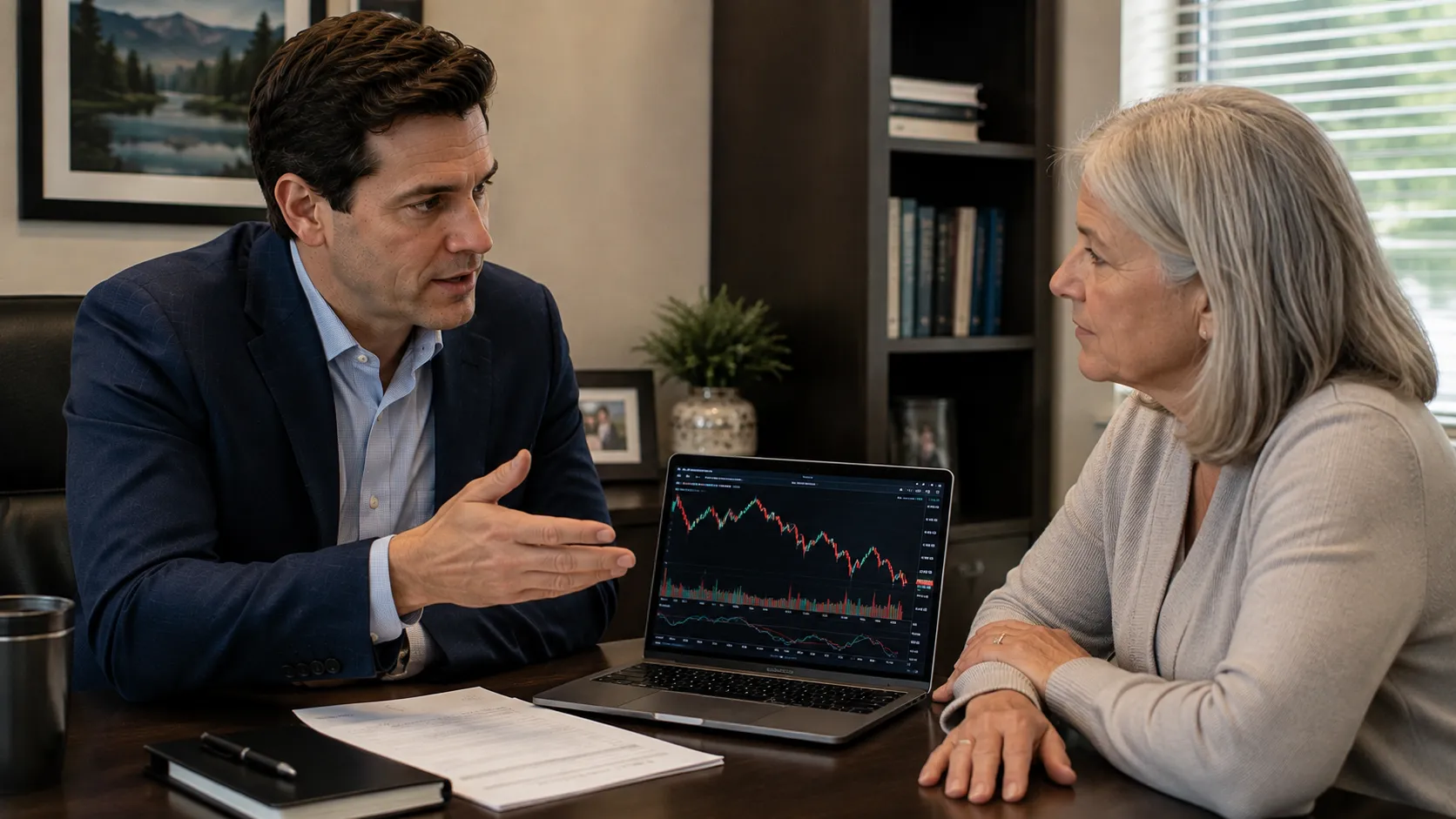
CCWMG’s approach specifically emphasizes creating resilience that allows a client to remain disciplined when others react emotionally, treating behavioral coaching as part of the ongoing relationship rather than a one-time conversation. CCWMG’s complimentary Second Opinion Service™ can offer exactly the kind of outside perspective that’s difficult to provide for yourself, especially during a volatile market.
Frequently Asked Questions
Are these biases the same for every investor, or do they vary by person? The specific magnitude varies by individual, but the underlying patterns are remarkably consistent across large populations of investors studied over decades, which is part of why they’re considered well-established rather than anecdotal.
Can experienced investors eventually train these biases away completely? Not entirely – even professional fund managers and researchers who study these biases remain susceptible to them, since the patterns are rooted in how the brain processes risk and reward, not simply a lack of knowledge.
Curious Whether Your Own Decisions Are Actually as Rational as They Feel?
The investors most confident they’ve avoided behavioral mistakes are often, ironically, the ones most susceptible to them. Creative Capital Wealth Management Group’s Second Opinion Service™ can offer the outside perspective that’s genuinely hard to give yourself.